

Audio description deadlines for 2027
Two audio description deadlines arrive in 2027. On January 1, 2027, the FCC’s audio description rules expand to TV markets (DMAs) 121–130. On April 26, 2027, state and local governments serving 50,000 or more people must meet the DOJ’s ADA Title II web accessibility rule, which requires audio description for prerecorded video they post online. Smaller governments and special districts follow on April 26, 2028.
What is audio description?
Audio description (formerly “video description”) is narration that describes important visual content, such as actions, scene changes and on-screen text, for viewers who are blind or have low vision. On television it is delivered on a secondary audio stream (SAP). Online, it is a described audio track or a described version of the video.
Who must comply, and when
| Who | Rule | What’s required | Deadline |
|---|---|---|---|
| ABC, CBS, FOX and NBC affiliates in covered markets | FCC, 47 CFR §79.3 | 87.5 hours of described programming per quarter (50 hours prime time or children’s programming, plus 37.5 hours between 6 a.m. and midnight) on each affiliated programming stream | DMAs 121–130: January 1, 2027; then 10 more markets every January 1 through 2035 |
| All network affiliates and larger MVPDs (50,000+ subscribers) | FCC | Pass through audio description when technically capable; MVPD carriage requirements | In effect now |
| State and local governments, 50,000+ population | DOJ ADA Title II (WCAG 2.1 AA) | Accessible websites and apps, including audio description for prerecorded video | April 26, 2027 |
| Smaller governments and special districts | DOJ ADA Title II (WCAG 2.1 AA) | Same as above | April 26, 2028 |

What this means for council meetings and public video
For cities, counties and agencies, the Title II rule reaches the video you post online: council and board meetings, public-information clips and training videos. Plan now for captions, described audio for prerecorded content, and an accessible video player. The rule includes limited exceptions, such as certain archived content, so confirm your situation with counsel.
See how EAR Professional Audio Video built hybrid meeting broadcasting for the Arizona State Legislature and city council chambers: hearing rooms and council chambers case study.
What it means for broadcasters
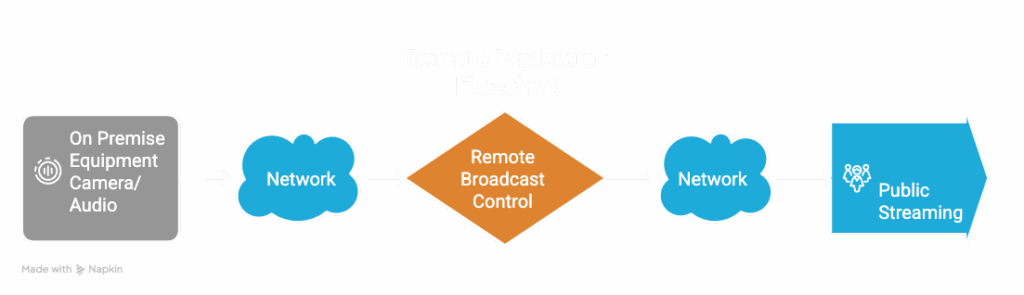
When your market is added, you need an unbroken audio description chain: scheduled AD hours, verified SAP/secondary audio paths from ingest through playout and MVPD hand-off, monitoring and proof-of-performance logs, and clear viewer instructions for turning AD on.

How EAR helps
EAR Professional Audio Video works with Invintus Media, a platform for government meeting video, to deliver audio description and accessibility workflows:
- AD-ready encoders, automation integration and secondary-audio routing
- Scheduling and pass-through workflows for the FCC’s 87.5-hour quarterly requirement
- Accessible meeting-video publishing for councils and agencies
- Monitoring, missing-audio alerts and audit-ready logs
- Hands-on training and checklists for production teams
Arizona agencies can purchase through state contract CTR075309, and public entities nationwide through 1GPA 22-02PV.
Frequently asked questions
Does the FCC rule apply to my station? Only ABC, CBS, FOX and NBC affiliates in covered DMAs. Markets are added 10 at a time every January 1 through 2035.
Do government meeting videos need audio description? Under ADA Title II, prerecorded video on government websites must meet WCAG 2.1 AA, which includes audio description, by the deadlines above. Some exceptions apply.
Is live video covered? WCAG 2.1 AA requires captions for live video; audio description applies to prerecorded video.
Sources: FCC audio description rules; 47 CFR §79.3; DOJ ADA Title II web accessibility rule (compliance dates extended by DOJ in April 2026). Last reviewed by EAR Professional Audio Video, October 2026.
About EAR
EAR Professional Audio Video (Engineering & Recording, Inc.) is a broadcast and professional AV systems integrator and reseller in Tempe, Arizona, founded in 1978. EAR designs, installs and supports systems for government, education, broadcast and corporate clients, and is an awarded supplier on Arizona state contract CTR075309 and national cooperative contract 1GPA 22-02PV.
Our specialized experience enables breakthrough remote workflows. From corporate communications to worship broadcasting, we pride ourselves on delivering extensive expertise that keeps you at the top of the rapidly evolving remote content creation landscape.

EAR Product & Services