REMI Production: 80% Savings, Downside Risks?
The uncomfortable truth about remote production that’s dividing the broadcast industry
What is REMI? REMI (Aka: Remote Integration Model or “At-Home”) handles production operations—switching, graphics, audio mixing—at a central facility or in the cloud, while only cameras and microphones deploy on-site. Video and audio feeds transmit back via IP networks in near real-time, reducing travel, equipment costs, and setup time while enabling centralized control over multiple simultaneous productions. Broadcasters report up to 70% cost reductions through minimized crews and eliminated the need for an outside broadcast truck (OB-truck) deployments, with on-site requirements dropping by 50% or more. The market for remote integration solutions is forecast to grow from $13 billion in 2025 to $36 billion by 2030. However, centralized IP architectures introduce vulnerabilities: single points of failure, network dependency, latency, and packet loss pose real operational risk in live environments.
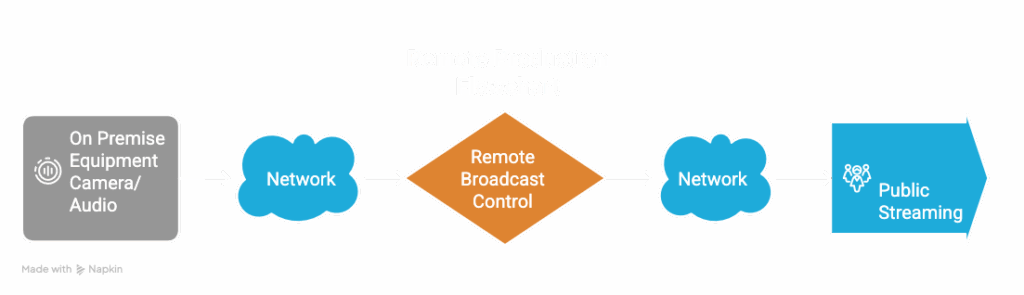
The Financial Revolution: Beyond Crew Savings REMI transforms broadcast economics from capital to operational expenditure. Cloud-based platforms convert $2-5 million OB truck investments—plus depreciation, maintenance, and insurance—into predictable monthly costs that scale with usage.
Pay-as-you-go means paying only for bandwidth and features per production, avoiding idle equipment that loses value. Hidden savings include eliminated shipping costs for multi-ton equipment, no insurance premiums on expensive trucks traveling highways, and zero risk of weather damage or accidents. As-a-service platforms include automatic updates, eliminating the cycle where 6 or 7 figure equipment becomes obsolete within five years. Capacity flexes instantly—4K HDR for playoffs, 1080p for regular season, without hardware locked to peak requirements. This delivers financial agility impossible with capital purchases: startups enter broadcasting without seven-figure loans, and established networks reallocate capital to content.

The Skills Gap
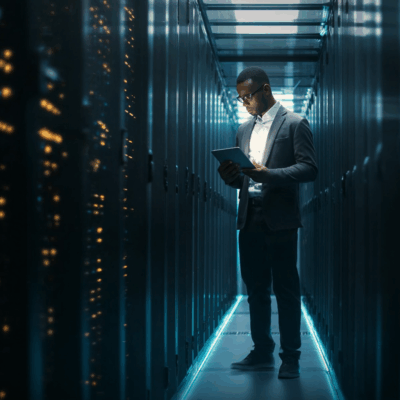
Traditional broadcast engineers excel at SDI signal flow and hardware troubleshooting with oscilloscopes. REMI demands IT networking expertise—Ethernet switching, multicast protocols, Quality of Service (QoS) configuration, and troubleshooting with network tools. Organizations face asking 20-30 year veterans to learn fundamentally different skillsets or hiring IT professionals who lack broadcast domain knowledge.
When network issues occur during live productions, troubleshooting shifts from “check the cable” to analyzing packet loss, jitter, and latency across distributed systems. Security vulnerabilities in IP workflows require cybersecurity expertise that traditional broadcast teams don’t possess. EAR offers decades of network expertise – trusted by major network production companies and fortune 500 security teams.
Risk Meets Reality Major sports networks like Fox have transformed their live production workflows with remote (REMI) technology, where audio and video originate from the event venue while commentary, graphics, and switching are managed from a central location. This approach, now an industry standard, dramatically reduces setup time, eliminates travel and shipping costs, and removes the need to transport heavy, expensive equipment and crews to every event—delivering professional results with greater efficiency and lower operational costs. Real-world examples highlight REMI’s transformative impact: during most NBA games, all camera feeds transmit back East, where replay operators assist referees with judgment calls on plays. G-League productions routinely send multiple simultaneous signals to local affiliate via Live-U using proprietary SRT, NBA Network via SRT feed, and opposing team clean feeds via RTMP (without graphics, using isolated audio channels)— then remote announcers are added before final distribution to local networks and websites. Productions now integrate NDI, ST 2110, and Dante across the workflow, eliminating costly dedicated routing systems in favor of flexible IP-based distribution that dynamically routes any signal to any destination based on production needs.
But when your live broadcast depends on IP connections beyond your control, what happens if they fail? The shift from on-premise equipment with physical backups to virtualized production means moving from visible hardware redundancy to other safeguards—whether that’s on-premise recorders for critical broadcasts or rebroadcast options for streaming-only events. REMI introduces new single points of failure across encoding, routing, and network infrastructure that challenge decades of proven live production practices. While well-designed REMI systems with reliable networks have minimal failure risk, your risk tolerance and event requirements will determine the appropriate safety measures—and good engineering ensures – “the show will go on”.
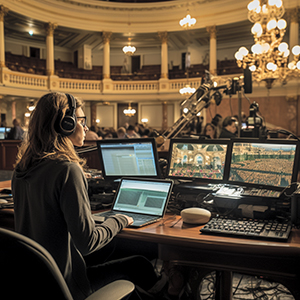
The Ideal REMI Events REMI has proven ideal for medium and moderate sized productions like college and high school sports, city council meetings, community events, and local news coverage, delivering professional broadcast quality without the overhead, logistics, and expense of traditional on-site setups. The on-demand approach transforms the economics entirely—no equipment sitting idle during the offseason, no storage costs, no maintenance budgets for gear that’s only used a few months per year. Organizations pay only for what they need, when they need it, while automatically staying current with the latest technology and completely avoiding the equipment obsolescence that traditionally drains capital budgets. For schools, municipalities, and regional broadcasters operating on tight budgets, this shift from capital expense to operational expense makes professional-quality live production financially accessible for the first time.
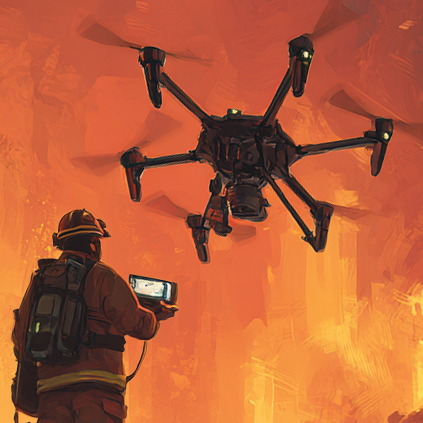
REMI for First Responders and Breaking News
Beyond sports and entertainment, REMI is revolutionizing emergency response and breaking news coverage. Cloud-based production lets command supervisors instantly access live feeds from incident scenes—without deploying satellite trucks or waiting for traditional infrastructure. During natural disasters or major incidents, centralized teams can become operational within minutes, routing camera, drone, and reporter feeds through the cloud for real-time coordination.
First responders now use REMI for multi-agency visibility, allowing fire, police, and emergency directors to view synchronized bodycam and aerial footage from remote command centers. News outlets can go live in minutes instead of hours, gaining critical speed over competitors. The same efficiencies that make remote sports production viable—no truck deployment, minimal on-site staff, instant scalability—translate into life-saving situational awareness when emergencies strike.
The Bottom Line
REMI presents both transformative opportunity and legitimate operational risk. Remote models show cost reductions up to 70% by cutting travel, lodging, on-site staffing, insurance, shipping, and equipment damage risks. Centralized workflows allow crews to support multiple events from fewer locations, reducing burnout. Trade-offs: REMI demands robust network infrastructure, redundancy, security, and staff skills in IP, QoS configuration, and cybersecurity. Implementation requires capital in facilities, connectivity, and retraining. The decision: do you have the organizational bandwidth, technical team, and financial buffer to absorb the risk if a high-profile remote production fails under network duress?
Ready to Navigate the REMI Transition? The shift to remote production isn’t a question of if, but when and how. Whether you’re evaluating REMI for cost savings, exploring hybrid models to minimize risk, or ready to implement cloud-based workflows for breaking news and live events, the technical decisions you make today will define your competitive position tomorrow. EAR’s team has guided broadcasters, houses of worship, corporate communications departments, and first responders through successful REMI deployments—balancing financial efficiency with operational reliability. Don’t navigate network infrastructure, encoding standards, and cybersecurity vulnerabilities alone. Contact our remote production specialists for a no-obligation consultation, call us at (800) 473-6914 or contact us via this website to discuss how REMI can work for your specific production requirements and risk tolerance.
About EAR
Every day, EAR reaches over 100 million people through our comprehensive range of professional products and services. As a trusted reseller of cutting-edge content creation and broadcast systems, we deliver the exact solutions remote production teams need now.
Our specialized experience enables breakthrough remote workflows. From corporate communications to worship broadcasting, we pride ourselves on delivering extensive expertise that keeps you at the top of the rapidly evolving remote content creation landscape.

EAR Product & Services